
Why Burbank Was Already Built for Post-Production
Burbank did not become useful to post-production because one school changed addresses. Its value came from a tighter bundle of conditions: proximity to production work, reachable instructors, screening access, commuter links, and a city already accustomed to media labor moving through it.
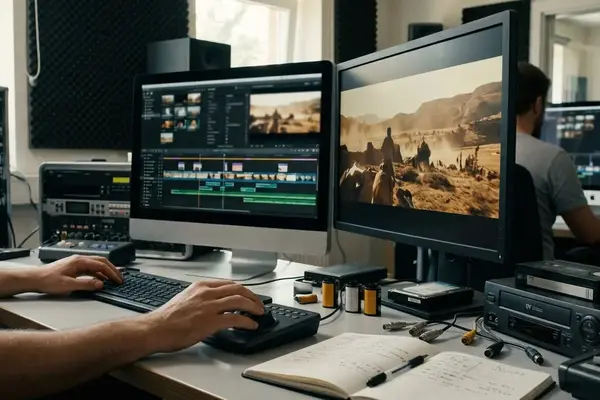
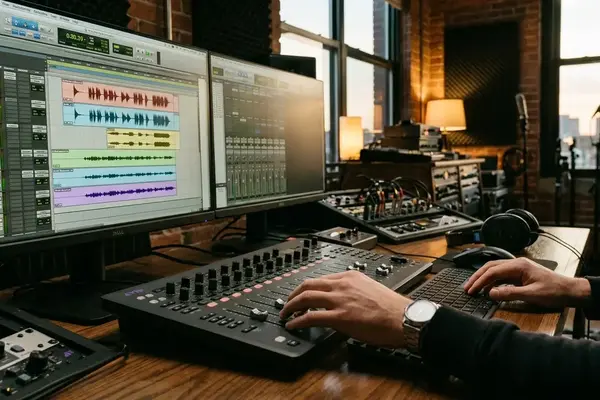
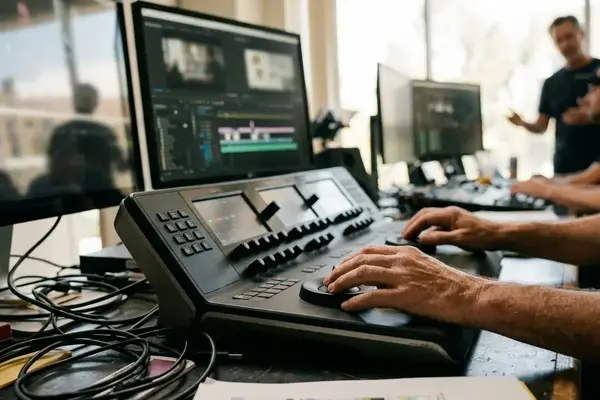
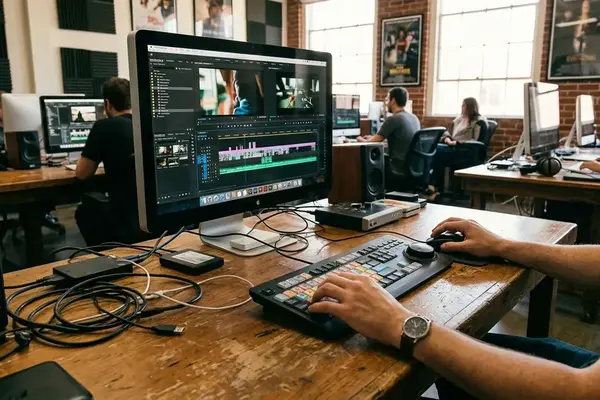
That distinction matters. Post-production training is not only a classroom activity. A serious editing, audio, compression, or finishing program depends on working practitioners who can teach after a shift, visit a lab between bookings, or bring current shop habits into the room without turning the lesson into a sales pitch.
A school move inside a larger media map
Video Symphony fits that map as an educational media and post-production training school founded around 1995, roughly 11 years before the Summer 2006 relocation discussed in this archive snapshot. By then, the school was not introducing media training to Burbank from scratch. It was moving within a region where training and production already had reasons to overlap.
The cleaner reading is geographic, not mythic. The relocation is newsworthy because it shows how a training provider looked at the physical requirements of professional instruction and chose a place where those requirements were easier to satisfy.
Bottom Line: Burbank’s post-production strength should be read as an operating environment, not a single-origin story. The school move reflected that environment and benefited from it.
Transit, Airport Access, and the Practical Geography of Training
Consider a visiting student arriving for a compressed bootcamp. The class may run long. The lab may be available after formal instruction ends. The student still needs to sleep, eat, get to campus, and perhaps make a return flight without burning a full extra day.
That is where Burbank’s practical geography becomes more than a civic talking point. Regional commuter access served instructors and working professionals who might have been moving between production areas. Metrolink, documented through the official Metrolink regional rail service, provided commuter connectivity in the Burbank area without requiring the article to make unsupported claims about ridership or commute-time savings.
The short-program problem
Intensive training changes the logistics. A semester student can slowly learn a city. A bootcamp student cannot. Every transfer, parking problem, or long surface-street trip competes with class concentration.
Bob Hope Airport, located about 4 miles from the campus referenced in the archive material, helped solve that problem for out-of-town attendees. The distance is modest enough to explain why the airport mattered, especially for students coming in for a defined block of training rather than a long relocation.
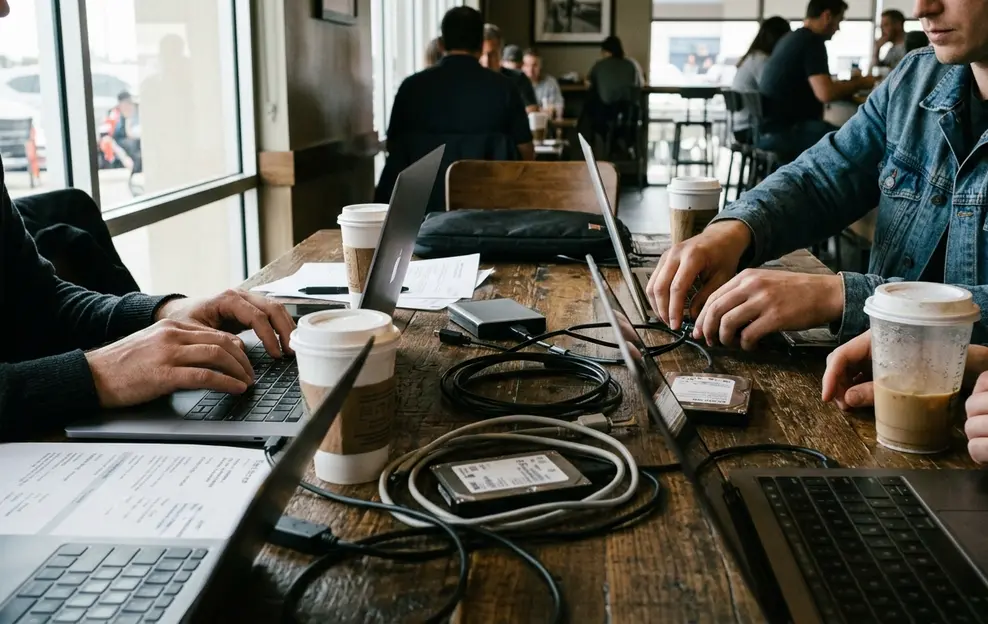
Access also mattered for guest speakers. A working editor, colorist, sound supervisor, or compression specialist is more likely to appear for a focused session when the trip does not consume the day. That is not glamorous infrastructure, but it is the infrastructure that makes training feel current.
What the Summer 2006 Move Signaled
In archive language, the headline is direct: Video Symphony moves to downtown Burbank. The more useful question is what that move signaled about the relationship between instruction and the professional post-production environment around it.
Mike Flanagan, President of Video Symphony, appears in this context as the person associated with the relocation, not as a decorative credential. The point is operational. A school teaching editing rooms, audio rooms, software discipline, and media workflow gains something when students can feel that the building sits near the work it describes.
Downtown as a training environment
The Summer 2006 move placed the school closer to a media-centered setting and helped make training less abstract. For a student learning post-production, that matters in small ways: screening culture nearby, working professionals in reach, and a stronger sense that class exercises relate to actual delivery rooms rather than isolated software drills.
The archive also references a nearby 30-screen multiplex relationship as a screening and media-education asset. That should be understood in its period context. It supports the idea that exhibition and instruction could sit near each other, but it does not prove a permanent arrangement today.
This is where the relocation earns its place in a post-production history note. It does not show Burbank being invented as a hub. It shows a training provider choosing to stand closer to the kind of professional practice its students were trying to enter.
Bootcamp Campsites: Where Visiting Students Could Stay
The phrase “Bootcamp Campsites” reads oddly if taken literally. In this archive context, it works better as shorthand for lodging support: places a short-term student could use while attending an intensive editing, audio, or post-production course.
What the lodging list was really doing
The named providers covered several practical categories rather than one ideal student hotel. Holiday Inn represented the standard hotel option. Safari Inn supplied a local inn choice. Media Center Suites pointed toward a suite-style arrangement. J.P. Allen served the apartment-style end of the list.
For a working adult taking time away from a job, these distinctions are not cosmetic. A student in long lab days may want predictable housekeeping. A student trying to control food costs may want a kitchenette. The archive notes that Media Center Suites and Safari Inn offered kitchenettes, which made them more relevant for longer stays or budget-conscious visitors.
Two of the lodging options also offered maid service, a detail that sounds small until a student is spending most waking hours in class, in a lab, or reviewing exercises. Clean rooms and reduced chores can matter when the schedule is dense.
Field Note: The lodging references should be treated as historical operational support, not booking advice. The 1997 price references belong to the archive period and should not be converted into current guidance.
The useful lesson is not that these specific providers are the answer for a present-day student. The lesson is that Video Symphony’s training model had to account for the full student path: arrival, room, class, practice time, meals, and departure.
What This Archive Snapshot Can—and Cannot, Prove
This archive supports a narrow, useful claim: one post-production training institution used location, transit, airport proximity, screening access, named leadership, and lodging support to make intensive media education more workable in Burbank.
It does not prove Burbank’s entire post-production history from one school move. The evidence is strongest when read as an operations record for one training institution, not as a full account of the city’s post-production economy.
Where the evidence is solid
- Video Symphony was founded around 1995, based on the relocation being described roughly 11 years later.
- The relocation belongs to the Summer 2006 archive window.
- The move placed the school in downtown Burbank, closer to a media-centered environment.
- Bob Hope Airport was about 4 miles from the referenced campus, supporting convenience for visiting trainees.
- The archive names lodging providers and amenities as historical student-support details.
Where caution is required
Hotel amenities, room arrangements, rates, ownership, and school partnerships may have changed after the archive period. A kitchenette mentioned in historical material should not be read as a current amenity. A screening relationship described near the 2006 move should not be treated as a standing partnership without fresh confirmation.
Important: The stronger conclusion is cumulative. Burbank worked for post-production training because several pieces reinforced each other: education, access, screening infrastructure, professional proximity, and visitor logistics.
That is why the Summer 2006 relocation remains useful as an archive snapshot. It captures a school aligning itself with the working geography of post-production. For students, that alignment made the difference between learning software in isolation and training near the habits, constraints, and expectations of the industry they hoped to join.



Your Thoughts
No comments.
Share Your Opinion