
Post-Production Is Not as Location-Free as People Pretend
Remote workflows exist. Early careers still hinge on proximity, availability, and local trust. Burbank and Hollywood function as working ecosystems rather than glamorous labels.
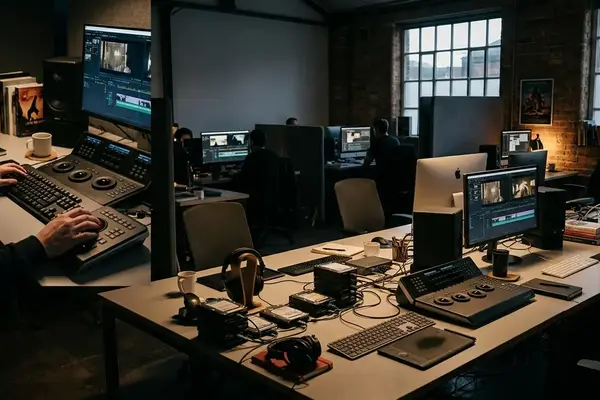
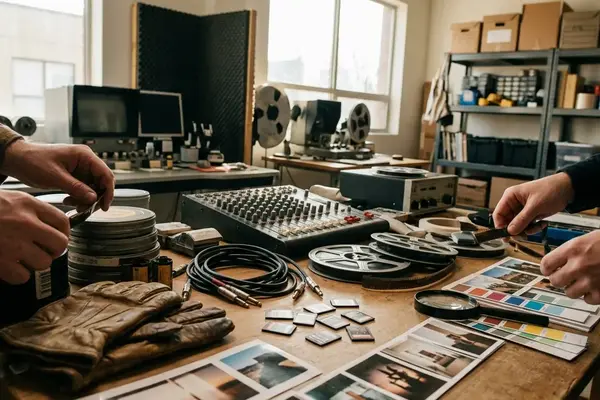
Assistant editors, audio trainees, color assistants, and technical operators gain from nearness to facilities, stages, schools, vendors, and peers. LTO tape delivery and uncompressed master handoffs often operate on strict courier windows of roughly four to six hours that penalize out-of-zone locations. Physical proximity allows trainees to shadow emergency hardware swaps, which typically must occur within a couple of hours to prevent production delays.
Burbank and Hollywood Teach Different Career Lessons
Take a concrete case. Dolby Atmos mixing stages require warehouse-scale physical footprints and acoustic isolation, driving these facilities toward the industrial zoning of the Valley rather than dense commercial Hollywood. That placement shapes daily routines for anyone learning the craft.
The broader principle follows: Burbank concentrates studio-adjacent work, media education, technical services, and professional routine. Hollywood maintains a higher density of screening rooms and talent representation offices, optimizing for hour-long executive review sessions rather than day-long technical processing. The implication is straightforward. Your choice of neighborhood steers the kind of problems you solve first.
The Commute Is Part of the Curriculum
How does geography shape entry-level habits? Los Angeles distances force practical decisions about punctuality, realistic scheduling, equipment logistics, and same-day responsiveness. A student or entry-level professional’s location can affect internship feasibility, night-class attendance, client review sessions, and last-minute assistant work.
Last-minute drive drop-off requests and turnover exports routinely occur in the early evening. Navigating the physical logistics of secure parking and loading docks adds time to any physical delivery task. The lesson arrives through lived repetition rather than classroom instruction.
Yes, Remote Post Is Real—But It Has a Gatekeeping Problem
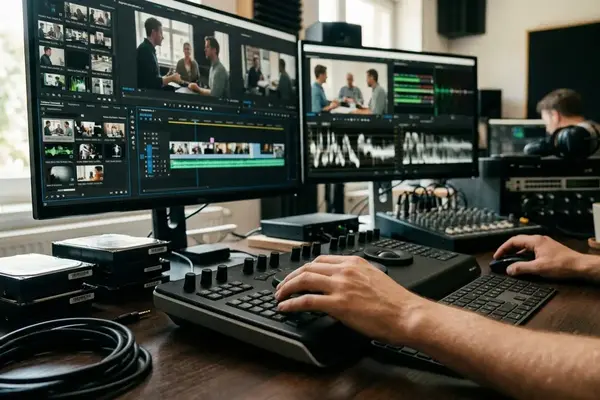
Cloud workflows, remote editing, shared storage, and review platforms have reduced the need to sit near a facility every day. Synchronous 4K playback sessions for remote client review demand a sustained upload bandwidth of roughly 50 to 100 Mbps, a threshold many entry-level residential connections struggle to maintain during peak hours. Establishing a secure, studio-compliant remote workstation often requires a vetting process of a few weeks by IT departments, a hurdle rarely cleared for short-term or entry-level freelance hires.
Established professionals can often work remotely because they already have trust, credits, references, and workflow discipline. Beginners may still need local access to mentors, labs, facilities, workshops, troubleshooting help, and informal referrals.
Choose Training Based on the Work You Want to Be Near
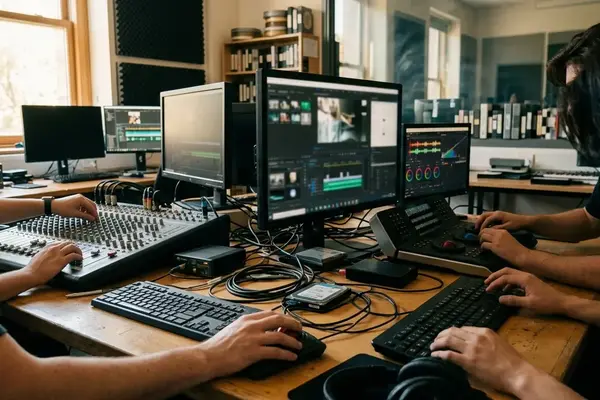
Map your intended destinations before picking a program. Evaluate training by access to relevant workflows: editing labs, audio rooms, codec and delivery instruction, shared storage practice, instructor industry experience, and schedule compatibility.
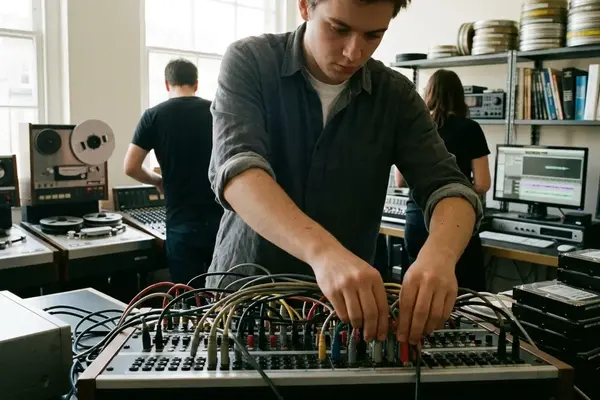
Shared storage area networks (SAN) can take around 15 to 30 minutes to rebuild directories after a crash, providing critical on-site troubleshooting practice that cannot be simulated in the cloud. In-person training labs typically cycle hardware upgrades every few years, exposing students to the exact physical patching and routing environments used in mid-tier post houses. Class location, home, internships, screening rooms, post houses, public transit or parking realities, and freelance client areas all factor into the decision.
What This Argument Does—and Does Not, Claim
Between 2021 and 2023, independent digital-first workflows decentralized rapidly, while major studio pipelines reinforced their centralized, highly secure physical infrastructure. This geographic dependency applies primarily to union-track studio features and broadcast television pipelines; independent digital-first creators often bypass these physical hubs entirely.
The piece does not claim every successful post-production career must begin in Burbank, Hollywood, or Los Angeles. Independent filmmakers, remote editors, international professionals, and self-taught artists can build strong careers outside these corridors.
My Position: Treat Geography as Career Infrastructure
Software skills matter. Where you place yourself can determine how quickly those skills meet real opportunity. Commercial lease commitments for post-production facilities typically span three to five years, physically anchoring the geography of the industry regardless of rapid software updates.
Bottom Line: Burbank and Hollywood are not just places on a map; they are different operating systems for a post-production career.
Choose neighborhoods, schools, internships, and schedules with the same intentionality you bring to choosing editing software or audio tools.
Your Thoughts
No comments.
Share Your Opinion