
A reliable set-to-post pipeline has one job: preserve the relationship between what the camera recorded and what editorial receives. Every folder, checksum, proxy, report, and signature should make that relationship easier to verify.
Quick Nav
- How file-based cameras shifted the handoff onto the set
- What production delivers and editorial accepts
- A repeatable card offload and release sequence
- A traceable camera-original package
- Proxy metadata that survives editorial relinking
- Dailies delivery and assistant editor acceptance
- A one-card test before principal photography
When the Film Lab Handoff Moved to the DIT Cart
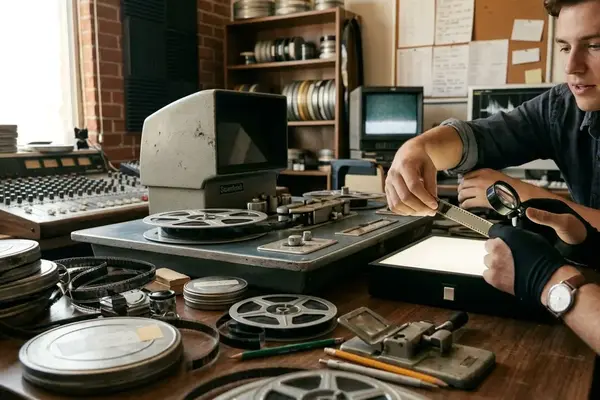
A film negative once left the camera department in a labeled can. Tape arrived in post as a physical cassette that a deck could read. In both cases, the object itself created a visible transfer boundary.
File-based acquisition removed that boundary. A camera card can pass from the camera team to a data station, from the station to production storage, and from storage to editorial during the same production day. Each move creates another opportunity to lose source identity, documentation, or an expected file.
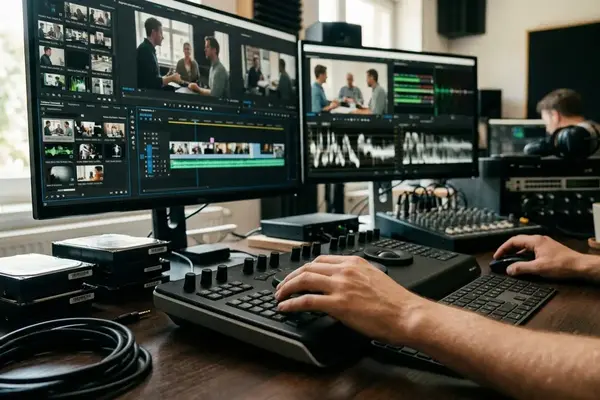
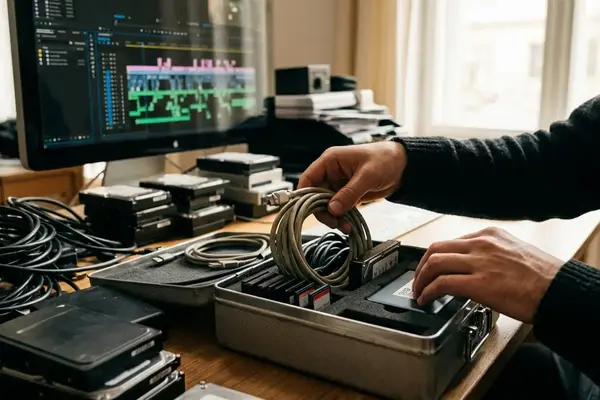
The DIT or data operator now connects exposed media, verified storage, dailies, and editorial. That connection matters because a mounted folder with playable picture proves very little by itself. The folder may lack sidecars, camera metadata, transfer evidence, or the structure needed for a later conform.
The Playable-Clip Trap
Opening a clip confirms that a decoder can read that file. It does not confirm that the full camera-created volume arrived, that every expected card reached the station, or that editorial can trace the proxy back to its source.
This is why digital media training has to cover the entire handoff rather than stop at copying or transcoding. The operator preserves the source, records its movement, prepares access media, and keeps enough identity intact for editorial to reconnect that access media later.
Write the Production-to-Editorial Contract First
What exactly counts as delivered?
The answer should come from editorial’s ingest and relink requirements. The post supervisor works backward from those requirements to define folder boundaries, proxy metadata, reports, verification records, delivery routes, and card-release authority. Closing these decisions during the final three to seven working days before the first camera day leaves time to test representative media and correct a broken mapping.
The agreement should name seven deliverable classes:
- Preserved camera-original volumes
- Verified storage copies
- Proxies or dailies media
- Camera reports
- Production sound reports
- Color references
- Transfer and exception logs
Then assign decision rights. Someone must approve card release. Editorial must own the proxy specification it expects to ingest. The appropriate production or post authority needs to settle naming rules, color treatment, delivery media, and final acceptance before those questions reach a busy cart.
Who Confirms Each Boundary
- Camera team: confirms the camera ID, card ID, expected recording status, and camera report entry when handing over media.
- Data operator: records intake, copies the complete volume, verifies each approved destination, retains job logs, and keeps the card on hold.
- Post supervisor: closes proxy, naming, delivery, escalation, and acceptance decisions with the receiving department.
- Assistant editor: acknowledges receipt, reconciles the manifest, tests representative media, and demonstrates the expected source relationship.
Codec, raster, burn-ins, and folder labels can change between facilities. Traceability, verified copying, and documented receipt remain the fixed controls.
Offload the Card and Hold the Release Line
Use the same intake sequence for every card. Repetition keeps small omissions from turning into wrap-time mysteries.
- Receive the card and read its camera and card identifiers back to the person delivering it.
- Confirm the source volume name and whether the medium is write-protected, where that medium allows it.
- Create or confirm the approved destination folders before starting the transfer.
- Record the delivery time, operator, destination paths, and copy start time.
- Copy the complete camera-generated volume to each required destination.
- Verify every approved destination as its own job and retain the resulting log.
- Record finish time, verification result, release status, and release time.
The complete volume includes its directory structure, sidecars, metadata, and non-clip files. Selecting only the visible video files strips away information that camera software, dailies systems, or conform tools may expect.
Ordinary drag-and-drop copying offers little useful evidence about the comparison between source and destination. A suitable copy application performs a source-to-destination comparison and produces a job record. Plan the operation from the card’s recorded byte count and the slowest measured destination rate. Verification requires another complete read comparison, so a card arriving roughly 20 minutes before camera reuse cannot safely be promised on copy time alone.
A successful checksum establishes that the bytes compared at source and destination are equal. Its scope ends there: it cannot establish that the intended take was captured, that the camera report lists every clip, or that corruption was absent before the source was read.
Keep Cards Grounded
A card stays in the marked hold area until required destinations verify, logs are saved, spot checks are complete, and the named release authority approves its return to camera.
If a copy stops or a comparison fails, preserve the job log. Mark the incomplete destination, block the card from release, and begin a fresh logged attempt on known-good storage. Merging new files into an uncertain folder makes the next diagnosis harder.

Give Every Original a Collision-Proof Address
Consider two cards that contain the same camera-generated filename. Dropping their clips into one flat directory creates a collision even though both source volumes were valid.
The card or reel identifier solves that problem at the containing-folder level. Keep camera filenames and internal volume structures intact beneath that container unless production has explicitly tested a different requirement. A practical daily package might look like this:
- SHOOT_DATE/CAMERA_ORIGINALS/A_CAM/A001
- SHOOT_DATE/SOUND
- SHOOT_DATE/PROXIES
- SHOOT_DATE/REPORTS
- SHOOT_DATE/COLOR_REFERENCES
- SHOOT_DATE/TRANSFER_LOGS
Facilities may choose different labels. The durable principle is separation: preservation media, access media, reports, references, and evidence occupy distinct areas.
I use the manifest as the index to that structure, because a tidy folder tree cannot explain an interrupted transfer or an off-speed clip. Each row should identify the production or unit, shoot date, camera, card ID, source volume name, destination, copy status, verification result, operator, release status, and any exception reference.
At the end of a transfer block, reconcile physical card arrivals against camera reports, sound reports, transfer jobs, and folders on storage. An unmatched identifier stays open. The exception note should name the affected card and clip, when the condition appeared, what action followed, and who received notice. Missing lens metadata, uncertain timecode, off-speed capture, and a clip absent from the camera report all belong here.
Can the Proxy Find Its Camera Original?
A proxy may look correct and still fail the conform. The important question is whether editorial can use its embedded identity to locate the matching source volume.
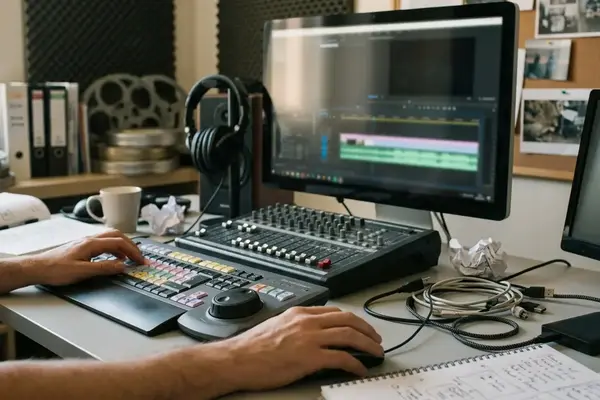
Editorial should approve the proxy specification before production. Record the container, codec, raster, source frame-rate treatment, audio channel order, filename rule, source or reel field, clip name, timecode behavior, viewing transform, and burn-in fields. These settings form one connected map; changing a filename rule while leaving the reel field untouched can alter how the receiving system identifies the source.
Originals come first. Begin proxy generation only after the corresponding camera volume has completed approved copying and verification. This dependency keeps the cart focused on preservation when time tightens.
Proxy QC With Relinking in Mind
Check the first and last visible frames, embedded and displayed timecode, duration, image orientation, audio presence, channel mapping, burn-in identity, and obvious color discontinuities. Preserve source identity, clip name, timecode, and duration wherever the editorial system expects them.
Reserve about 15 to 30 minutes of editorial testing for one normal clip, one clip synchronized with production sound, and one edge case such as off-speed or missing-sync media. The test finishes when the assistant editor identifies the matching card folder and demonstrates a relink. A successful transcode alone leaves the main question unanswered.
Stage Dailies for Assistant Editor Acceptance
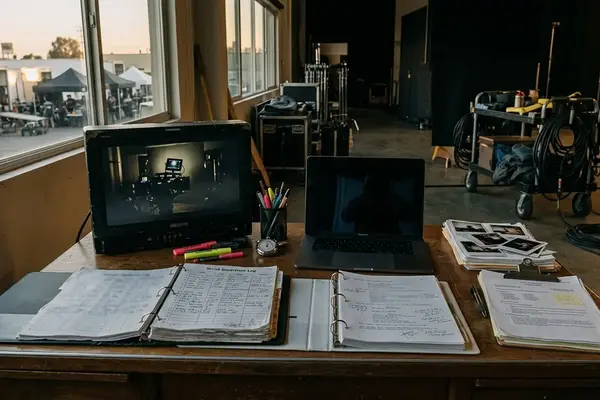
Build the delivery package from the staged handoff area, rather than generating its manifest from the working cart. The staged package should separate camera originals, proxies, production sound, reports, color references, and transfer logs so access media cannot be mistaken for preservation media.
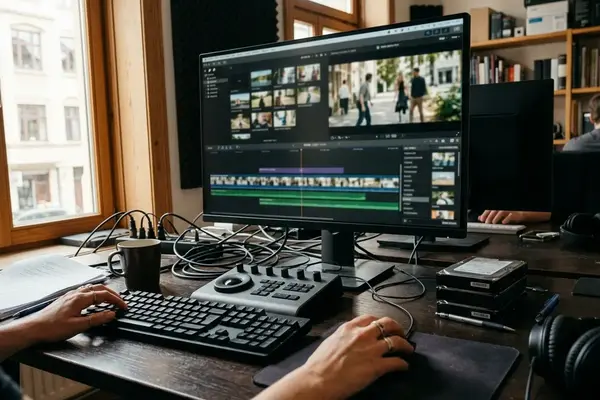
The assistant editor then reconciles expected cards and folders, confirms that storage mounts or network transfers have completed, opens representative files, and compares the documentation with the package.
Physical and Network Records
- Physical handoff: record the delivery-device ID, package path, handoff time, sender, recipient, and acknowledged exceptions.
- Network handoff: record the destination path, transfer completion state, manifest version, sender, recipient, and acceptance time.
The transport changes. Acceptance criteria stay consistent: expected items are present, the media mounts or transfers correctly, representative files play, and the documentation matches what arrived.
When card IDs, proxy folders, reports, and exceptions share identifiers, the shift-closing reconciliation can fit within a defined window of 10 to 20 minutes. Unexplained mismatches remain open instead of being marked delivered.
Four Handoff Proofs
Every package needs four states recorded: copied, verified, identified, and accepted. Missing any one of them means the handoff remains in progress.
Run One Card All the Way Through Editorial
Use a representative card rather than a pristine picture-only sample. Include picture, production sound, source timecode, camera metadata, a viewing transform, and at least one non-routine condition. That mix exercises the decisions most likely to break under production pressure.
Reduce the approved workflow to a one-page runbook arranged in operating order:
- Card intake and identifier confirmation
- Destination naming
- Logged copying and verification
- Card-release approval
- Proxy creation and preset version
- Camera, sound, transfer, and exception reporting
- Escalation contacts
- Delivery destination
- Editorial acceptance record
Record deviations when they occur. A note tied to the card or clip identifier is useful; a reconstructed memory at wrap usually lacks the exact time, storage path, or person notified. Revise the runbook after the assistant editor has ingested the proxy, located its camera original, and exercised the relink path.

Schedule that one-card editorial test 3 to 7 working days before principal photography, and do not close it until the relink succeeds.


Your Thoughts
No comments.
Share Your Opinion