The Real Problem: Post-Production Changes Faster Than Any One Editor Can Track
The decision is rarely just a button
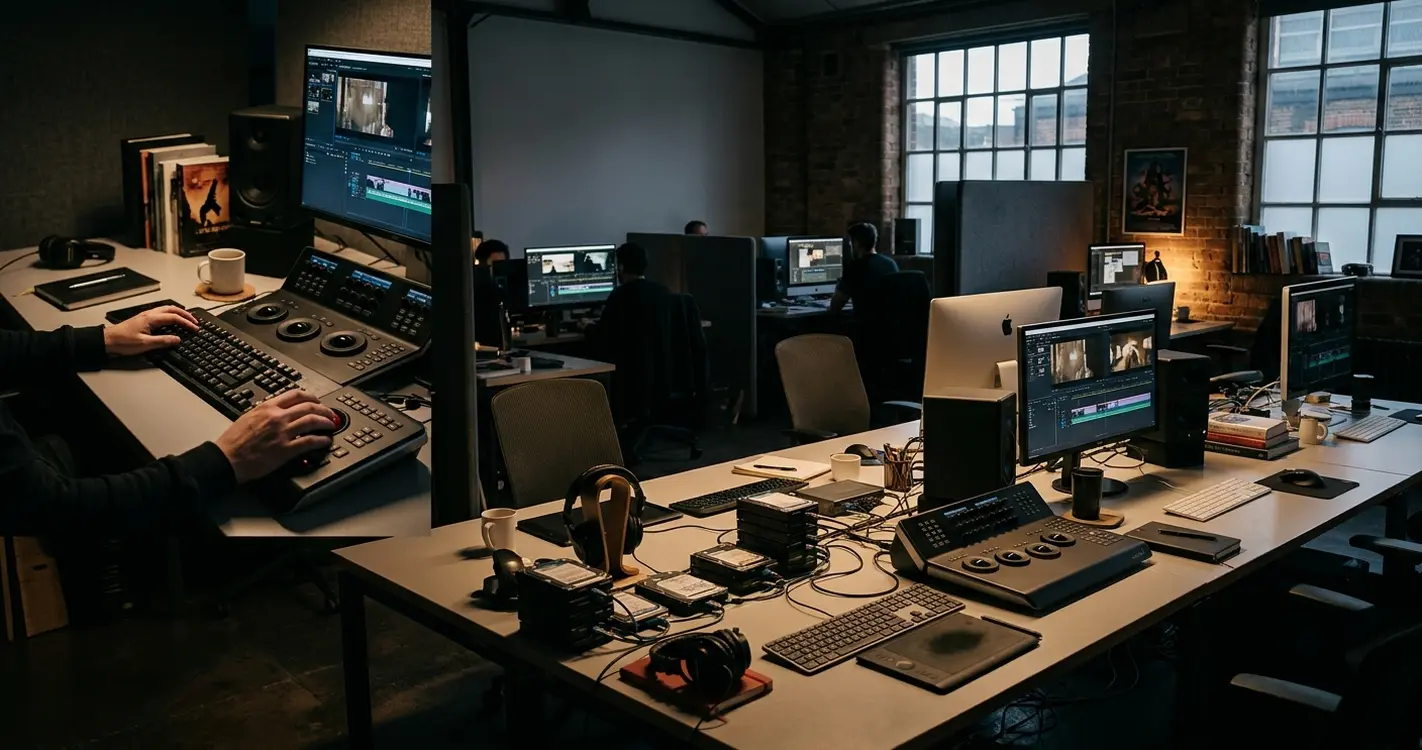
Editors who rely only on isolated self-study fall behind because post-production changes at several layers at once: tools, formats, delivery expectations, and the informal hiring networks that decide who is trusted with the next handoff.
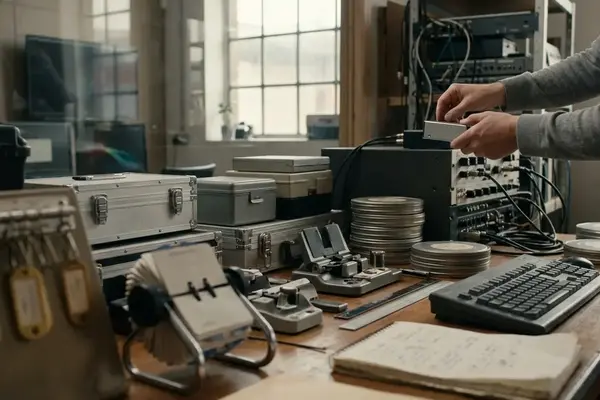
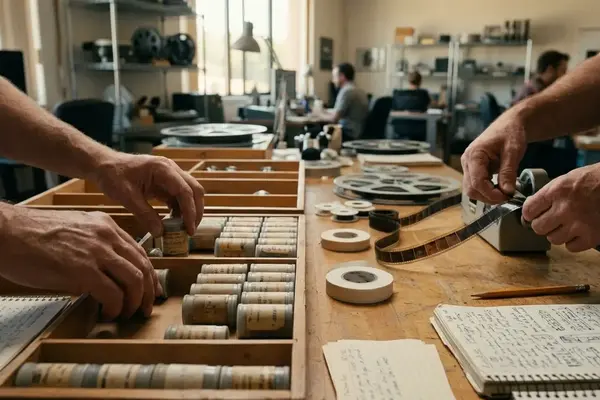
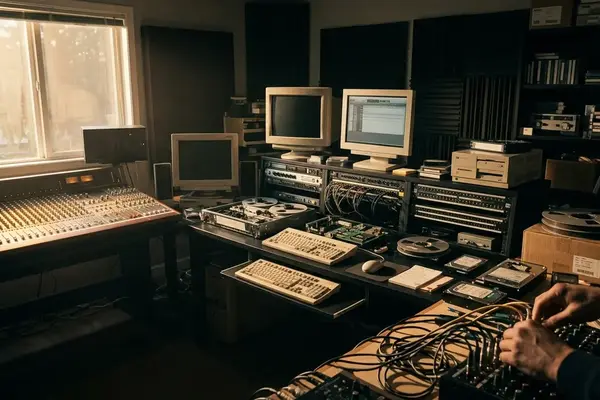
The early-2000s archive around Video Symphony makes that pressure unusually visible. Avid systems, Pro Tools, DVD-Video, QuickTime review files, HDV camcorders, compositing tools, and web media were not moving in neat sequence. They were colliding in the same edit rooms, on the same job boards, and inside the same training conversations.
The useful question was not whether an editor could read a manual. It was whether that editor could tell which workflow change mattered next. A button-level tutorial might teach an export command, but it would not explain whether the resulting file would survive approval, mix, conform, or delivery.
Bottom Line: Self-study teaches commands. Community learning teaches relevance.
A Newsletter Was More Than News: It Was a Learning Map
Repeated announcements became a priority system
June 2003 is a useful lens because the Video Symphony Newsletter did not behave like a simple bulletin. It connected software releases, instructor updates, student opportunities, user meetings, and career-oriented news in one run of dated updates.
For a training provider at 731 N. Hollywood Way, that mattered. Learners were not only asking what had changed in a release note. They were trying to decide whether to spend the next week studying Avid workflow, Pro Tools turnover, DVD authoring, compositing, or camera formats.
Mike Flanagan appears in that archive as President of Video Symphony across training announcements, state workforce-training contract coverage, and institutional positioning. In context, his role helps show how the school framed industry change for students rather than merely reporting it.
Recurring references to a June 27–28 production expo in Los Angeles, a July 27–31 computer graphics expo in San Diego, NAB-related release coverage, and professional audio post-production meetings gave learners a shared attention list. The newsletter reduced scattered vendor announcements and hallway rumor into something closer to a curriculum map.
Software Churn Made Community Learning Essential
Interoperability was the real lesson
What did an editor actually need to understand when software changed this quickly? Not every menu. Not every feature. The harder issue was interoperability.
Compositing alone raised several questions. A version 3 Mac OS X compositing release, a version 6.0 motion graphics release with vector paint and OpenGL support, and node-based compositing in effects training all pointed toward a workstation environment where render paths, graphics acceleration, and media exchange mattered as much as the visible interface.
Editorial workflow had its own pressure points: accelerated editor hardware expected in mid-to-late 2003, interchange through AAF, and media handling across DV25, DV50, and IMX. Those terms were not trivia. They shaped whether a project could move between offline editorial, finishing, sound, and delivery without wasting days on preventable fixes.
The FX Academy context sharpens the point. LightWave3D served as the primary animation package, Shake and Digital Fusion handled compositing concerns, and RealViz-style tracking and modeling belonged to the 3D problem set. Lee Stranahan’s January 7, 2002 role as FX Academy Program Director, with the next session scheduled for March 2002, places that training inside a period when effects education had to account for entire pipelines, not isolated tools.
A classroom, user group, or instructor-led demonstration could test the practical consequence: whether a workstation, codec, graphics card path, or interchange format would actually support the promised workflow under facility conditions.
Sound Communities Made Invisible Craft Visible
Meetings turned release notes into listening practice
The revived Los Angeles Pro Tools Users Group offers a concrete example. Its first revived meeting took place on May 15, 2003, hosted at RSPE Audio Solutions in Universal City, with Digidesign connected to the surrounding Pro Tools ecosystem.
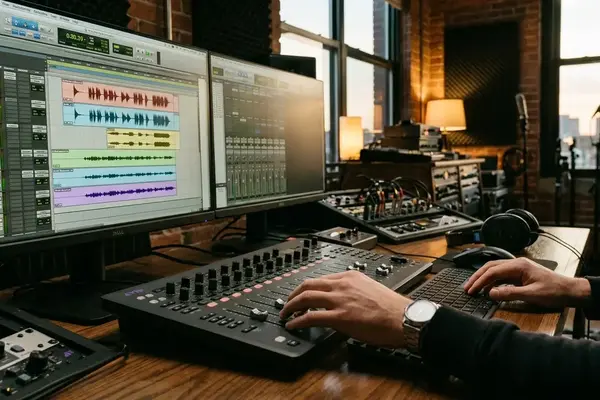
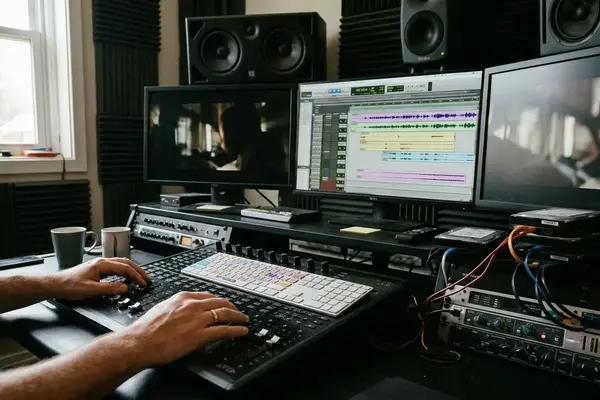
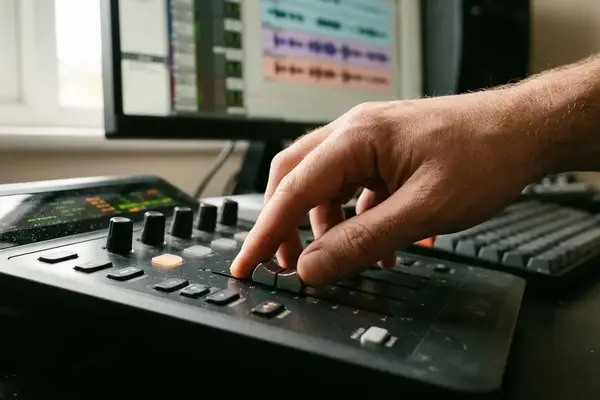
That setting changed the nature of the information. Pro Tools v6.1 and 002-style workstation hardware were not just product names. They raised practical questions about editing, mixing, smaller-room post setups, session exchange, and what could be trusted outside a large facility.
Sound editing is often hidden under picture editorial. ADR, Foley, track layout, cueing, and manual repair work become visible only when someone names the labor and plays the difference. A PT 140 Post Production Sound class could make that craft legible in a way a release note could not.
Victoria Rose Sampson’s April 2004 news item, framed through the Motion Picture Editors Guild sound-awards context for Pirates of the Caribbean, belongs in that same discussion. It is not useful as decoration. It shows that sound craft had a public professional language, and students needed access to that language if they were going to judge their own work clearly.
Festivals and Expos Turned Tools Into Professional Context
Events compressed months of comparison into days
Events mattered because they forced vendor language into contact with production questions.
A Los Angeles production expo on June 27–28, 2003, a San Diego computer graphics expo on July 27–31, 2003, and a Sedona workshop in March 2004 were more than calendar items. They were compression chambers. Editors could compare demos, peer reactions, instructor interpretation, and hardware claims within a few days instead of piecing them together over months.
Major spring broadcast-industry show coverage did similar work. New digital nonlinear hardware projected for mid-to-late 2003 could sound decisive in a booth, but editors still needed to ask what that meant for storage, interchange, offline preparation, and delivery expectations.
The JVC GR-HD1 is a good example of why community interpretation mattered. As a pro-sumer high-definition camcorder, it introduced questions around CCD sensors, spatial offset, HD acquisition expectations, and how footage would enter an editing workflow. The camera was not only a camera problem. It was an editorial planning problem.
Field Note: The best event takeaway is rarely “buy this.” It is usually “test this before promising it to a producer.”
The Hidden Curriculum Was Career Access
Communities taught how skills translated into work
After the tools, the archive points toward a quieter subject: professional mobility. Communities helped editors understand hiring pathways, placement norms, assistant-editor readiness, and how a software skill became a job-relevant responsibility.
Arthur Axelman’s February 2006 appointment as Industry Liaison fits that pattern. His former senior role at William Morris, his television packaging background, and the David Mamet connection belong here as career context, not as a glossy credential stack. The point is that students were being placed near people who understood how work moved through the industry.
Norman Mayers as Director of Placement and Jon Tronowsky as Director of Student Relations also belong in the same support system. Their relevance is practical: students needed help translating training into interviews, credits, recommendations, and realistic expectations about entry-level responsibility.
Nate Hubbard’s June 2002 Migrant Editors article adds another workplace signal. Laptop-based nonlinear setups and on-set digitizing changed where editorial labor could happen. That shift affected who was hired, what equipment they were expected to understand, and how portable an editor’s workflow judgment had to become.
The archive also includes state workforce-development references, including an October 15, 2001 training-contract award and a February 7, 2000 contract connected to discreet-effects training through the California Employment Training Panel. The careful reading is not that such contracts guaranteed outcomes. It is that training, public workforce support, and industry-facing placement were being discussed together.
The Counterargument: Can’t Editors Just Learn From Manuals?
Documentation is necessary, but it is not a workflow mentor
The strongest version of the opposing view deserves respect. Manuals, vendor documentation, and solo tutorials are necessary for technical precision. A serious editor should know how the software describes its own operations.
The limitation appears when command knowledge meets facility expectation. An assistant editor may know how to export a review file and still mishandle naming, reel references, audio channel order, approval files, or interchange metadata for turnover.
AAF interchange, QuickTime review delivery, DVD-Video authoring, Avid offline editorial preparation, Pro Tools audio-session handoff, and Sonic Solutions DVD authoring all expose the same divide. The professional question is not only “where is the command?” It is “what does the next department need from this decision?”
A student can complete a compositing tutorial successfully and still be unable to explain whether the resulting media belongs in offline editorial, finishing, or a graphics round-trip. That is not a failure of intelligence. It is a missing context problem.
Important: Documentation can be accurate and still leave the editor unprepared for the handoff.
What This Archive Can—and Cannot, Prove
A specific ecosystem, not a universal measurement
This article reads an archive, not a controlled study. The evidence reflects a Los Angeles-area post-production training and professional community from roughly 2000 to 2006, not a universal history of editing education.
That qualifier matters because the archive contains several authority signals: instructor awards, Emmy-related documentary work, state workforce-training contracts, leadership appointments, user-group meetings, and dated newsletter items. Those items are meaningful, but their meaning is bounded by the training ecosystem they document.
The Day My God Died is a useful example. Its 2005 Emmy nomination, Tamera Martin’s instructor and editor role, and Tim Robbins as narrator show professional proximity around the school’s community. They do not prove that all community learning leads to awards, nor should they be used that way.
The better conclusion is narrower and stronger: the archive shows a community trying to interpret technical change while connecting students to craft standards and professional pathways.
How Editors Can Use the Same Community Practice Now
Turn change into a repeatable review cycle
The archive model still translates. Editors do not need to recreate the early-2000s tool stack. They need to recreate the habit of testing tool changes in public, with peers who understand the handoff.
A practical cycle can run over roughly two working weeks. Spend two days listing the current tool stack and delivery obligations. Bring one workflow question to a user group, instructor-led forum, or trusted professional community. Use three to five days for a small workflow test. Reserve one day to write a peer-facing summary of what worked, what broke, and what should be checked before the next job.
The question should change by role. An assistant editor should prioritize nonlinear editing project structure, interchange, turnover folders, naming conventions, relinking behavior, and media organization. A sound editor should focus on workstation session structure, ADR cueing, Foley organization, track naming, and handoff to mix. A motion artist should track compositing, 3D tracking, render settings, color handoff, and whether the chosen format survives editorial review.
This is where community remains practical rather than nostalgic. Elite editors do not merely follow software releases. They stay close to communities that turn change into judgment.



Your Thoughts
No comments.
Share Your Opinion